
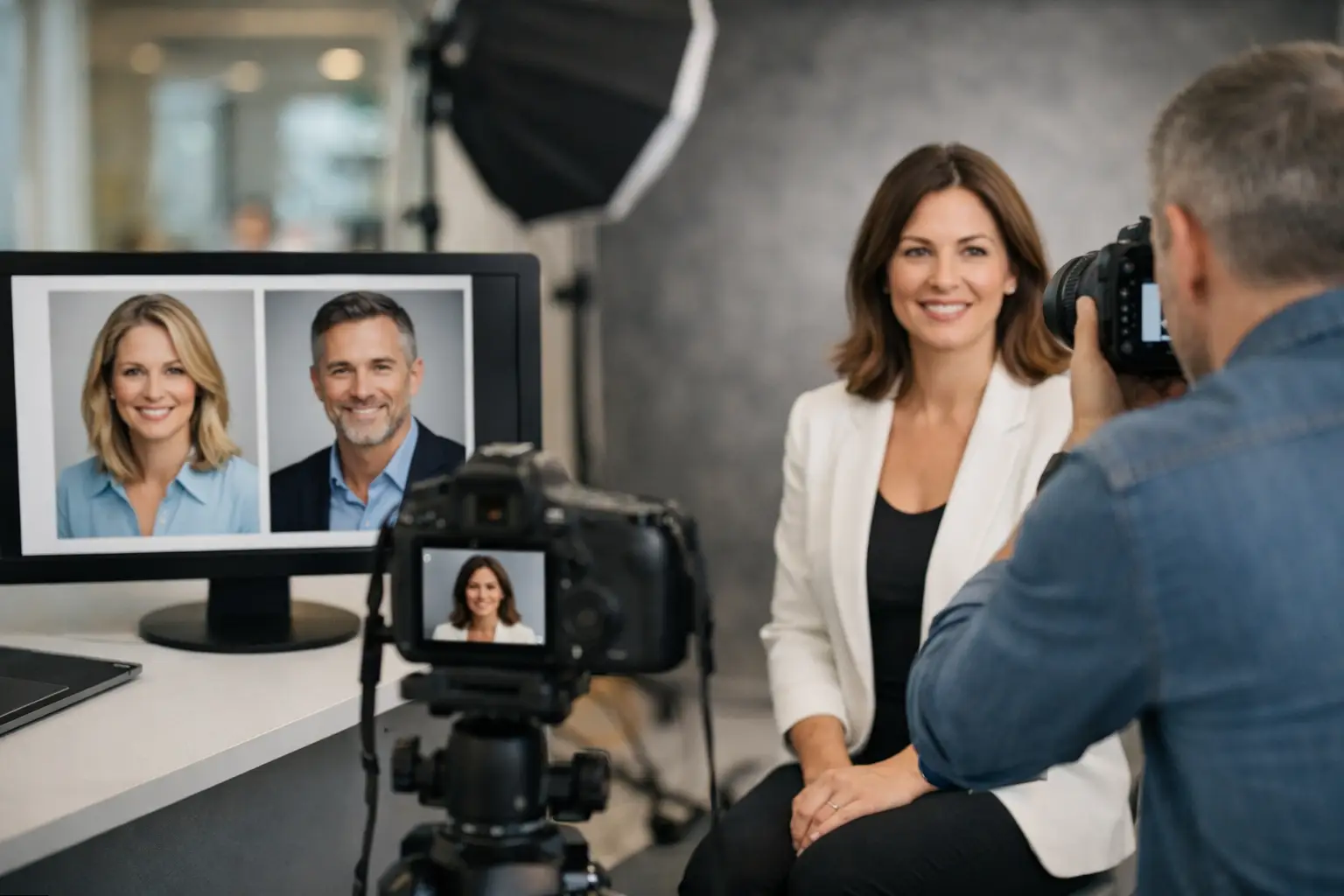
A headshot can quietly fall out of date before you realize it. You update your job title, refresh your website copy, and adjust your brand positioning, but the photo people see first may still reflect a version of you from years ago. If you have been asking how often update professional headshots, the short answer is every 1 to 2 years for most working professionals – but the better answer depends on what has changed in your appearance, role, and visibility.
A professional headshot is not just a nice image to have on hand. It shapes first impressions across LinkedIn, company websites, speaker bios, press features, email signatures, and social media. When the photo feels current, people sense alignment. When it does not, something feels off, even if they cannot immediately explain why.
How Often to Update Professional Headshots
For many professionals, updating a headshot every 12 to 24 months is a smart rhythm. That timeline usually keeps your image aligned with how you actually look and how you want to be perceived. If you are actively networking, growing a business, speaking publicly, or showing up regularly in marketing materials, staying closer to the 12-month mark often makes sense.
If your career is more stable and your appearance has not changed much, you may be able to stretch that timeline a bit. A polished, well-lit headshot does not expire on a set date. What matters more is whether it still feels like you on your best, most current day.
This is where context matters. A corporate team page, for example, benefits from consistency and recency because it reflects the company as a whole. A personal brand headshot may need more frequent updates because your business, style, and online presence evolve faster.
The real question is whether the photo still matches you
People often focus on age when deciding whether to refresh a headshot, but age alone is rarely the issue. Relevance is. If your haircut, glasses, facial hair, weight, style, or overall presentation has shifted in a noticeable way, your photo should probably shift too.
That does not mean every small change requires a new session. The goal is not perfection. It is recognition. If someone meets you after seeing your headshot online, they should feel like they are meeting the same person.
That consistency builds trust. It is especially important for entrepreneurs, service providers, and client-facing professionals, where the relationship often starts before a conversation ever happens.
Signs it is time for a new headshot
Sometimes the timing is obvious. Other times, the signs are subtle and easy to ignore. If you hesitate before uploading your headshot to a speaking submission, that is usually a clue. If you crop an old group photo because you do not want to use your official headshot, that is another.
You may need a new headshot if your current image looks noticeably older, your role has changed, your industry presence has grown, or your brand has become more refined. The same is true if your current photo feels too casual, too stiff, too heavily edited, or simply disconnected from how you want to show up now.
There is also the practical side. If your image quality looks dated next to newer profiles, your headshot can unintentionally signal that your brand is not current. Visual standards have changed. Clean, natural, authentic portraits tend to feel stronger than older studio images with harsh lighting or overly formal posing.
Career changes usually call for a refresh
A promotion, career pivot, new business launch, or leadership move is a natural moment to update your headshot. Your image should reflect the level you are operating at now, not the one you have outgrown.
This matters because different seasons of work call for different visual messaging. A headshot for a first corporate role may need to feel approachable and polished. A headshot for a founder, consultant, or executive often needs a bit more presence, confidence, and clarity. Neither is better. They simply serve different goals.
If you have recently rebranded your business, redesigned your website, or started showing up more intentionally on social media, a current headshot helps tie everything together. It makes your visual identity feel cohesive rather than pieced together over time.
How often update professional headshots for LinkedIn and websites
LinkedIn and your website are often the first places people check, so they deserve the most current version of your headshot. If you use these platforms actively, refreshing your photo every 1 to 2 years is a strong rule of thumb.
For LinkedIn, the right timing is often tied to visibility. If you are job searching, building partnerships, growing your professional network, or attracting clients, an updated headshot can support that momentum. It signals that you are active, engaged, and paying attention to your professional presence.
For websites, the standard can be even higher. Your site is part of your brand experience, and an outdated portrait can make the whole business feel less polished. If your website photos no longer match your current look, your messaging, or the overall design of the site, it is worth updating them.
Teams should update headshots more strategically than randomly
For companies, headshot timing should be planned rather than left to chance. A team page works best when the images feel visually consistent, recent, and aligned with the brand. That usually means updating headshots every 1 to 2 years, or sooner if there has been major growth, turnover, or a rebrand.
Consistency matters here because team photos do more than identify people. They communicate culture. When some team members have bright, modern portraits and others have older images with different lighting, backgrounds, or crops, the page can feel uneven.
A coordinated update also tends to reduce stress. Instead of waiting until someone urgently needs a photo for a media request or conference bio, the company already has polished images ready to use.
Personal branding may require more frequent updates
Entrepreneurs and personal brands often benefit from refreshing headshots more often than traditional professionals. If your face is closely tied to your business, your audience notices visual changes quickly.
This does not always mean booking a full session every year. Sometimes a focused refresh is enough. But if you regularly use your image across Instagram, LinkedIn, newsletters, speaking materials, and your website, staying current gives you more flexibility and confidence.
It also helps your content feel more intentional. A strong headshot is not just for the About page. It becomes part of how people recognize your brand across platforms.
What makes a headshot last longer
Some headshots age better than others. Clean styling, natural expression, simple backgrounds, and thoughtful lighting tend to have more staying power than trend-driven choices. When the photo feels authentic rather than overly produced, it usually remains useful for longer.
The session experience matters too. People often keep outdated photos because they disliked their last headshot session and do not want to repeat it. A relaxed, guided approach changes that. When the process feels collaborative and comfortable, the final images tend to feel more like you, which makes them easier to use and easier to update when the time comes.
That is one reason many professionals in Burlington and the surrounding area look for a studio experience that balances polished results with genuine direction. The best headshots do not just look professional. They feel believable.
If you are unsure, use the recognition test
Here is a simple way to decide. Open your current headshot and ask two questions. First, if a new client or employer met you tomorrow, would they recognize you immediately from this image? Second, does this photo reflect the way you want to be seen right now?
If the answer to either question is no, it is time for an update.
You do not need to wait until your photo feels embarrassingly old. The better moment is usually earlier, when a refresh can support your next step instead of scrambling to catch up with it. A current headshot gives you one less thing to second-guess and one more tool you can use with confidence.
The right photo should make showing up feel easier. If yours still does that, keep it. If it does not, that is your cue.