
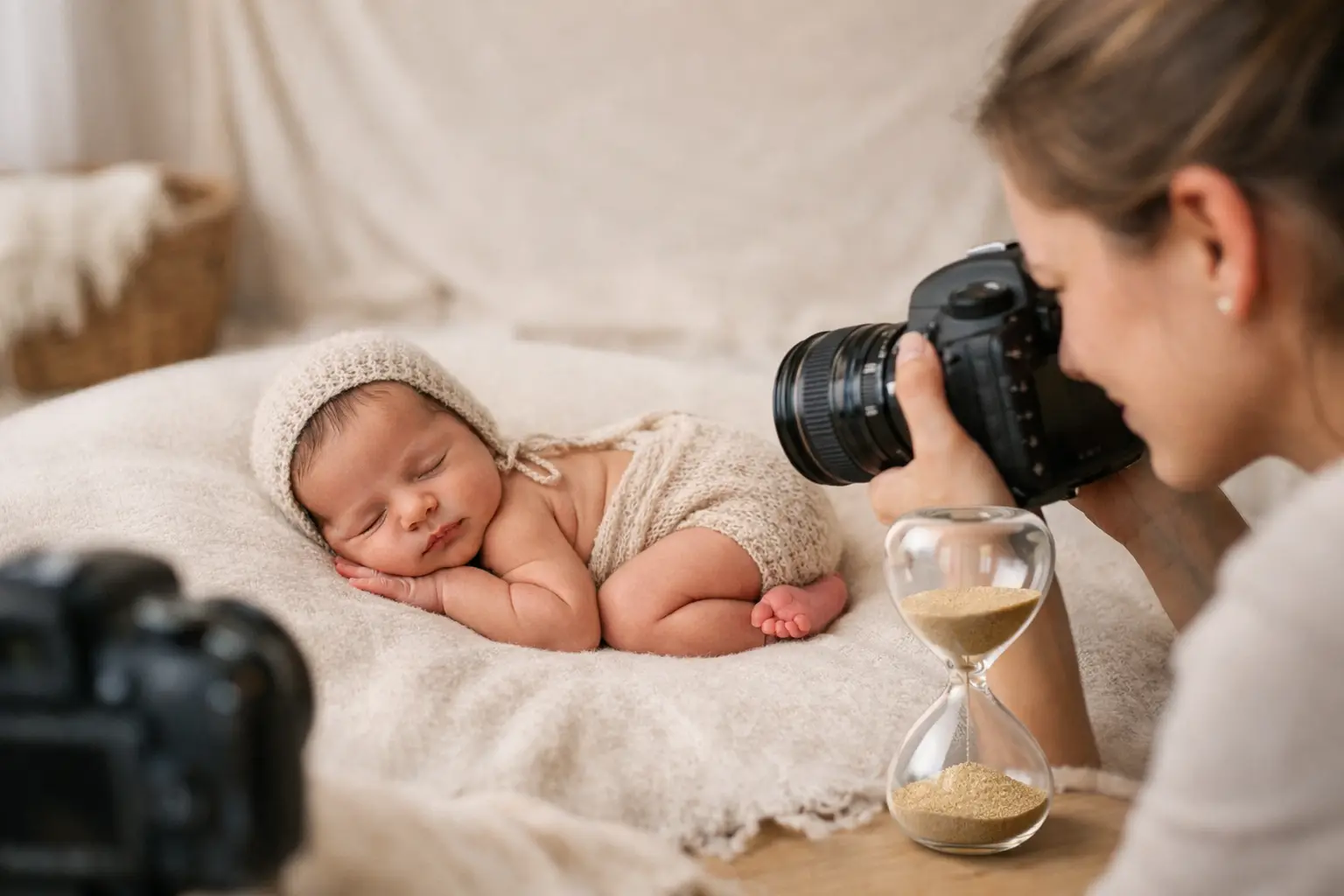
You can plan nap schedules, pack the diaper bag, and pick the softest swaddle in the house – and still have one big question before booking: how long do newborn photos take? It is one of the most common questions parents ask, and for good reason. Newborn sessions move at baby speed, not adult speed, which means the timeline needs to leave room for feeding, comforting, diaper changes, and pauses that cannot be rushed.
For most families, a newborn photo session takes between 2 and 4 hours. That range surprises some parents at first, especially if they are used to quicker family mini sessions or headshots. But newborn photography is a very different experience. The goal is not to move fast. The goal is to create a calm, comfortable session that gives your baby time to settle and gives you natural, polished images without stress.
How long do newborn photos take on average?
If you want the short answer, most newborn sessions land around 3 hours. Some wrap sooner if the baby is deeply sleepy and easily settled. Others stretch closer to 4 hours if your little one needs extra feeding time, more soothing, or a few breaks between setups.
That timing usually includes more than just taking photos. It also covers swaddling, changing blankets or outfits, repositioning baby safely, settling siblings if they are part of the session, and making space for parent images. A good newborn session is paced thoughtfully. It should feel gentle, not rushed.
This is why photographers often block off a larger window than the actual camera time might suggest. The flexibility matters. Babies do not follow a production schedule, and the best images often happen when everyone has permission to slow down.
Why newborn sessions take longer than other photo sessions
A newborn session is built around comfort and safety first. That changes the rhythm completely.
With older kids or adults, a photographer can guide poses quickly and keep momentum going. With a newborn, every movement is slower and more intentional. Even a simple pose change can take several minutes because the baby may need to be soothed, rewrapped, or allowed to settle back into sleep.
Feedings are another major factor. If your baby gets hungry mid-session, that is not a delay – it is part of the process. The same goes for diaper changes, spit-up cleanups, and those moments when your baby just wants to be held for a while. A relaxed session makes room for all of it.
That extra time also supports better results. Parents tend to feel less pressure when they know the schedule is realistic. Babies often respond better to a quiet, unhurried environment. And the final gallery usually reflects that sense of ease.
What affects how long newborn photos take?
There is no single timeline that fits every baby. Some sessions are very smooth from the start. Others need a little more patience. Both are normal.
Your baby’s age can make a difference. Many newborn sessions happen within the first two weeks, when babies are often sleepier and curl more naturally into classic newborn poses. Babies photographed a bit later may be more alert, more expressive, and sometimes less likely to stay asleep for long stretches. That does not make the session worse. It simply changes the pacing and style.
Feeding style also matters. Breastfeeding, bottle feeding, or a mix of both can influence how often breaks are needed and how long they last. Some babies feed quickly and settle right back down. Others like to take their time.
The session design plays a role too. A baby-only session with a simple, clean approach may move faster than a session that includes siblings, multiple family combinations, and several styling changes. The more variety you want, the more time should be built in.
Temperament matters as well. Some newborns sleep through almost anything. Some are alert and curious. Some need more contact and reassurance between setups. None of this is a problem. It is simply part of creating an experience that feels responsive instead of forced.
What happens during a newborn session?
Knowing the flow can make the timeline feel much more manageable.
Most sessions begin with a few minutes of settling in. Parents arrive, baby gets comfortable, and everyone eases into the space. If the session is in your home, there is still a short adjustment period while the photographer prepares and checks the best light and setup areas.
From there, the session usually follows the baby’s cues. Swaddled images often come first because many babies feel secure when wrapped. If baby is sleepy and calm, the photographer may transition through a few gentle poses and setups. If baby is awake or unsettled, the session may pause for feeding or comforting before moving on.
Parent and sibling images are often woven in at strategic points. Younger siblings, in particular, usually do best when their part of the session is handled efficiently and with clear guidance. That way, the experience feels smooth for them too.
Throughout the session, there are natural pauses. These are not wasted time. They are built into the process. Some of the most meaningful images come after a feeding break, when the baby has fully relaxed and parents have had a moment to breathe.
Studio sessions vs. in-home sessions
If you are wondering how long do newborn photos take in a studio compared with at home, the answer is usually similar, but the experience can feel slightly different.
Studio sessions tend to be a bit more controlled. Lighting, temperature, wraps, and backgrounds are already prepared, which can help the flow stay consistent. For parents who want a polished, guided experience with minimal setup stress, a studio often feels easier.
In-home sessions can also be beautifully relaxed, especially for families who want a more personal, lifestyle-driven feel. There may be a little more flexibility in the way the session unfolds because baby can stay in a familiar environment. At the same time, available light, room setup, and household rhythm can influence pacing.
Neither option is automatically faster. It comes down to the style you want and where you will feel most comfortable.
How to help your session run smoothly
You do not need to manage every detail perfectly, but a little preparation can support a calmer timeline.
Try to keep expectations gentle. Babies pick up on stress, and parents do too. If you go into the session assuming there will be pauses, the entire experience tends to feel easier.
A full baby is often a sleepy baby, so many photographers recommend feeding right before the session begins or planning for a feeding once you arrive. Dressing baby in something easy to remove can also help avoid waking them unnecessarily.
For parents, simple outfits and a flexible mindset make a big difference. If siblings are involved, it helps to bring a favorite quiet activity or comfort item. The goal is not perfection. It is creating enough calm that real moments can happen naturally.
Is a longer newborn session better?
Not always, but enough time is important.
A session that is too short can feel rushed, especially if baby needs two feedings or takes time to settle. On the other hand, a session that drags on without a clear flow can feel tiring for everyone. The best newborn sessions are not long for the sake of being long. They are structured with enough space to respond to baby while still moving with intention.
That balance matters. A thoughtfully guided session helps parents feel cared for, keeps safety front and center, and creates room for authentic images rather than stiff, hurried ones.
This is one reason many families choose an experienced studio like Fotoreflection. A calm process, clear direction, and a strong understanding of newborn pacing can make the session feel far easier than parents expect.
When should you schedule your newborn photos?
If you want those curled-up, sleepy newborn portraits, booking during pregnancy is usually the best move. That gives you a place on the calendar while still allowing flexibility around your actual delivery date.
Most newborn photos are scheduled within the first 5 to 14 days after birth, but that window is not a hard rule. Babies older than two weeks can still be photographed beautifully. The session may simply lean a little more natural and baby-led, with a different mix of sleepy and awake moments.
If you had a difficult recovery, your baby arrived early, or life just felt too full in those first days, it is still worth reaching out. The best timing is the one that works for your family and supports a calm experience.
When parents ask how long do newborn photos take, they are often really asking something deeper: will this feel manageable with a brand-new baby? The answer should be yes. A well-planned newborn session makes space for real life, meets your baby where they are, and turns a few unhurried hours into images you will keep reaching for long after the newborn stage has passed.