
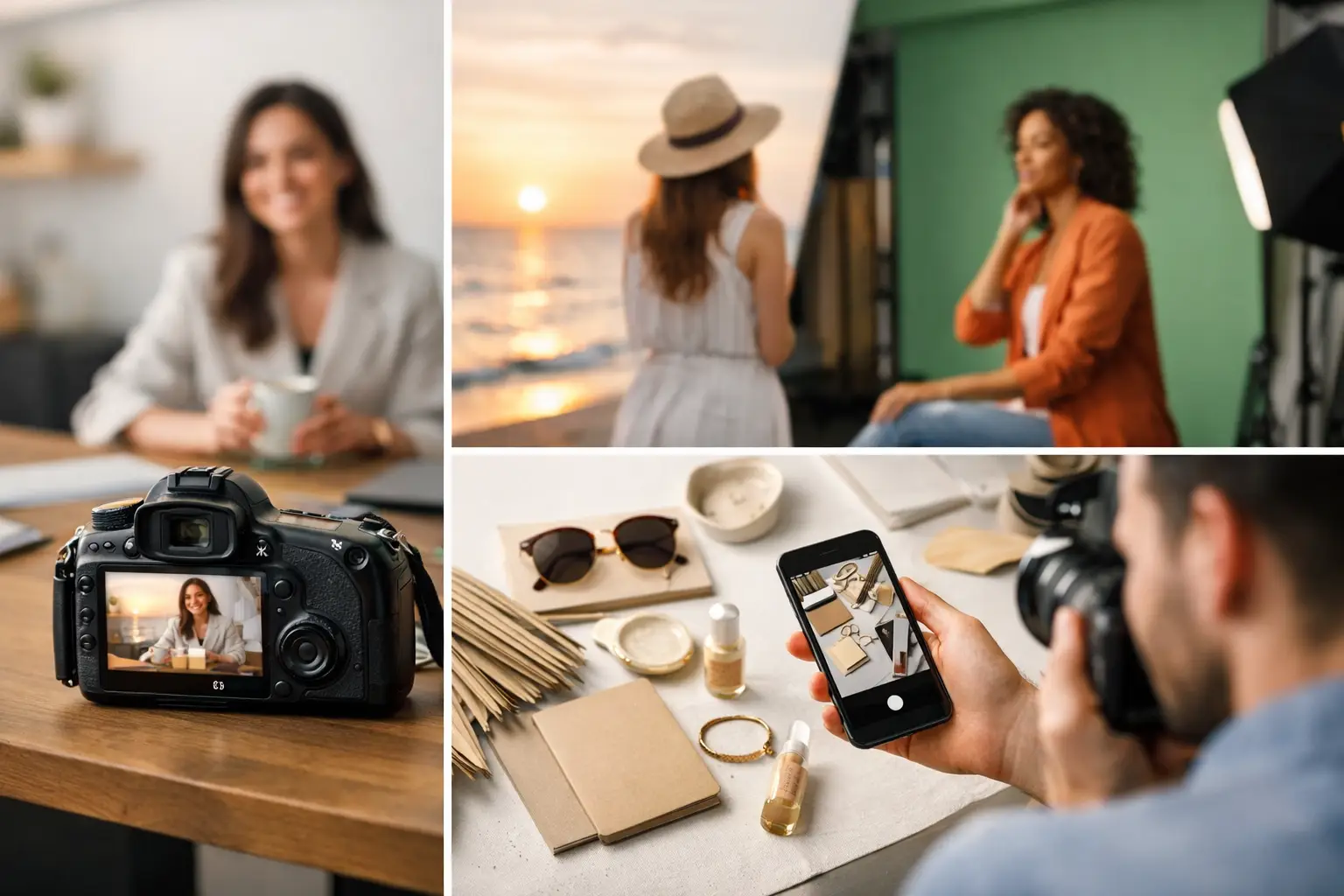
A polished headshot on a plain backdrop still has its place, but it no longer carries an entire brand on its own. The biggest branding photography trends 2026 point to something more layered: images that feel strategic, personal, and believable at the same time. For entrepreneurs, teams, and growing businesses, that shift matters because people are making fast judgments based on visuals long before they read a caption or book a call.
What is changing is not just style. It is intent. Brands are asking more from their photography now – not only to look professional, but to show personality, create trust, and work across websites, social content, speaking features, ads, and press opportunities. The strongest imagery in 2026 is less about looking perfect and more about looking clear, consistent, and genuinely connected to the brand behind it.
Branding photography trends 2026 are moving past staged perfection
For years, brand imagery often leaned heavily on polished poses, spotless desks, and expressions that felt a little too prepared. The visual result was clean, but not always convincing. In 2026, the preference is shifting toward images that still feel refined, yet more natural in body language, environment, and emotion.
That does not mean messy, casual, or under-produced. It means guided photography that leaves room for real expression. A founder laughing between takes, a team in conversation, a service provider in motion, or a business owner working within an actual client-facing space often communicates more trust than a highly controlled image ever could.
There is a trade-off here. If everything looks too candid, the brand can start to feel inconsistent or less premium. If everything looks too polished, it can feel distant. The sweet spot is direction without stiffness. That is where branding photography becomes most effective.
The most useful trend is story-led image planning
One of the clearest branding photography trends 2026 is a move away from random content days. Businesses are becoming more selective about what gets photographed and why. Instead of collecting a gallery of nice-looking images, they are building photo libraries around specific brand stories.
That may include founder visibility, behind-the-scenes process, client experience, workspace atmosphere, product use, service delivery, or team culture. Each image set serves a purpose. Some support credibility on a website. Others help social media feel more personal. Others are designed for launches, media kits, recruiting, or seasonal campaigns.
This is especially valuable for service-based businesses. A consultant, coach, designer, agent, lawyer, wellness provider, or creative studio often sells trust before anything tangible. Photography that shows how the experience feels can be as important as photography that shows the person behind the business.
When planning is thoughtful, sessions feel easier too. Clients are less likely to freeze in front of the camera when they understand the role each image will play.
Real environments are replacing generic backdrops
Studio portraits remain useful, especially for clean headshots and consistent team imagery. But many brands are leaning into real locations that support their identity. Offices, storefronts, creative studios, homes, hospitality spaces, and urban settings all bring context that a blank backdrop simply cannot.
In 2026, location choice is becoming part of brand strategy. A fitness brand may want movement and energy. A therapist may want warmth and calm. A corporate team may want architecture and clean lines. A food brand may need a space that feels tactile and lived-in rather than overly styled.
The key is alignment. Not every business benefits from a highly detailed environment. Sometimes the location adds depth. Sometimes it distracts. Strong branding photography uses the setting to reinforce the message, not compete with it.
Texture, depth, and a more editorial look
Along with real locations, there is growing interest in images that feel slightly more editorial. That can mean stronger composition, cleaner negative space, more intentional framing, and a subtle sense of narrative. The image still needs to be usable for marketing, but it can also carry a point of view.
This trend works particularly well for founders and brands that want to look modern without feeling trendy. Editorial-inspired branding photography often ages better than gimmick-driven visuals because it is rooted in mood, shape, and confidence rather than short-lived social media habits.
Personal brand visibility is becoming non-negotiable
Even businesses with larger teams are seeing more value in founder-led and people-centered imagery. Audiences want to know who they are buying from, who will serve them, and what kind of experience they can expect. In many industries, anonymity now reads as distance.
That does not mean every business owner needs to become a full-time content personality. It means there should be enough visual presence to make the brand feel human. A mix of portraits, working shots, and interaction-based images helps potential clients connect faster.
For teams, this trend is expanding beyond the standard row of matching headshots. Companies want portraits with personality, paired with collaborative images that show communication, leadership, and culture. The result feels more believable and often more useful across different platforms.
Multi-purpose content is shaping how sessions are photographed
A major practical shift behind branding photography trends 2026 is the demand for versatility. Businesses are no longer booking sessions for a single homepage banner or one profile image. They need a gallery that can support months of marketing across multiple formats.
That affects shot planning in a big way. Vertical crops matter more because of reels, stories, and mobile layouts. Negative space matters because designers need room for text overlays. Consistent wardrobe planning matters because images may appear across different campaigns over time. Variety matters because repeating the same pose across every platform weakens the brand.
This does not mean every session needs hundreds of images. It means the final gallery should be intentionally useful. A smaller set of well-planned photographs usually performs better than a large set of disconnected ones.
Short-form video is influencing still photography
Even when a client is booking photography, the visual language of video is affecting what photographs feel current. Images with motion, interaction, and in-between moments tend to feel stronger because audiences are used to dynamic content.
You can see this in walking shots, hands-at-work images, environmental portraits, and sequences that suggest movement rather than static posing. Still photography is not trying to imitate video completely. It is borrowing some of its energy.
For brands, this is a smart shift. Movement creates warmth and helps people who are camera-shy feel less locked into perfection.
Retouching is getting lighter and more believable
Over-edited branding photos are losing favor quickly. Skin that looks airbrushed, colors that feel overly processed, and heavy smoothing can make a brand appear dated or disconnected from reality. In 2026, polished still matters, but believable matters more.
Clients want to look like themselves on a very good day. They want confidence, not a different face. They want clean tones, flattering light, and thoughtful editing that supports the image rather than announcing itself.
This is one of the most reassuring shifts for people who feel nervous about being photographed. The goal is not to erase every human detail. The goal is to present you at your best in a way that still feels honest.
Brand consistency matters more than trend-chasing
Not every visual trend will suit every business, and that is a good thing. A law firm, a wellness practice, a personal brand, and a restaurant should not all look the same just because a certain style is popular. The strongest brands in 2026 are using trends selectively.
That may mean choosing softer light instead of dramatic contrast, or a quiet indoor setting instead of a bold city scene. It may mean incorporating team interaction but keeping individual portraits classic. It may mean creating images that feel contemporary while still fitting an established brand identity.
This is where experience matters. Good branding photography should reflect the market you serve, the level you want to be known for, and the way you want people to feel when they encounter your brand.
What these trends mean for businesses booking a session
For business owners and teams, the takeaway is not to chase every new look. It is to be more intentional. Before a session, it helps to ask what the images need to do. Build trust? Support a launch? Refresh a dated website? Humanize a growing team? Show a more premium client experience?
Once that is clear, the right visual direction becomes much easier to define. Wardrobe, location, posing, lighting, and shot variety all follow the strategy. The final result feels less forced because it is rooted in purpose.
That is also why a relaxed, collaborative process matters so much. When people feel comfortable, the images look more confident. When the session is thoughtfully guided, natural results become much more likely. For many brands, that combination is what turns photography from a box to check into a real business asset.
The best images in 2026 will not be the trendiest ones. They will be the ones that make the right people stop, look twice, and feel like they already trust you.